
Rent & housing
The Short-Term Rent Premium: Why Monthly Stays Cost More, and How to Pay Less
Furnished, ready-to-move-in monthly flats cost more than local rent. Where the premium comes from, the 28-night rule and negotiating on the platform, in one round calculation.

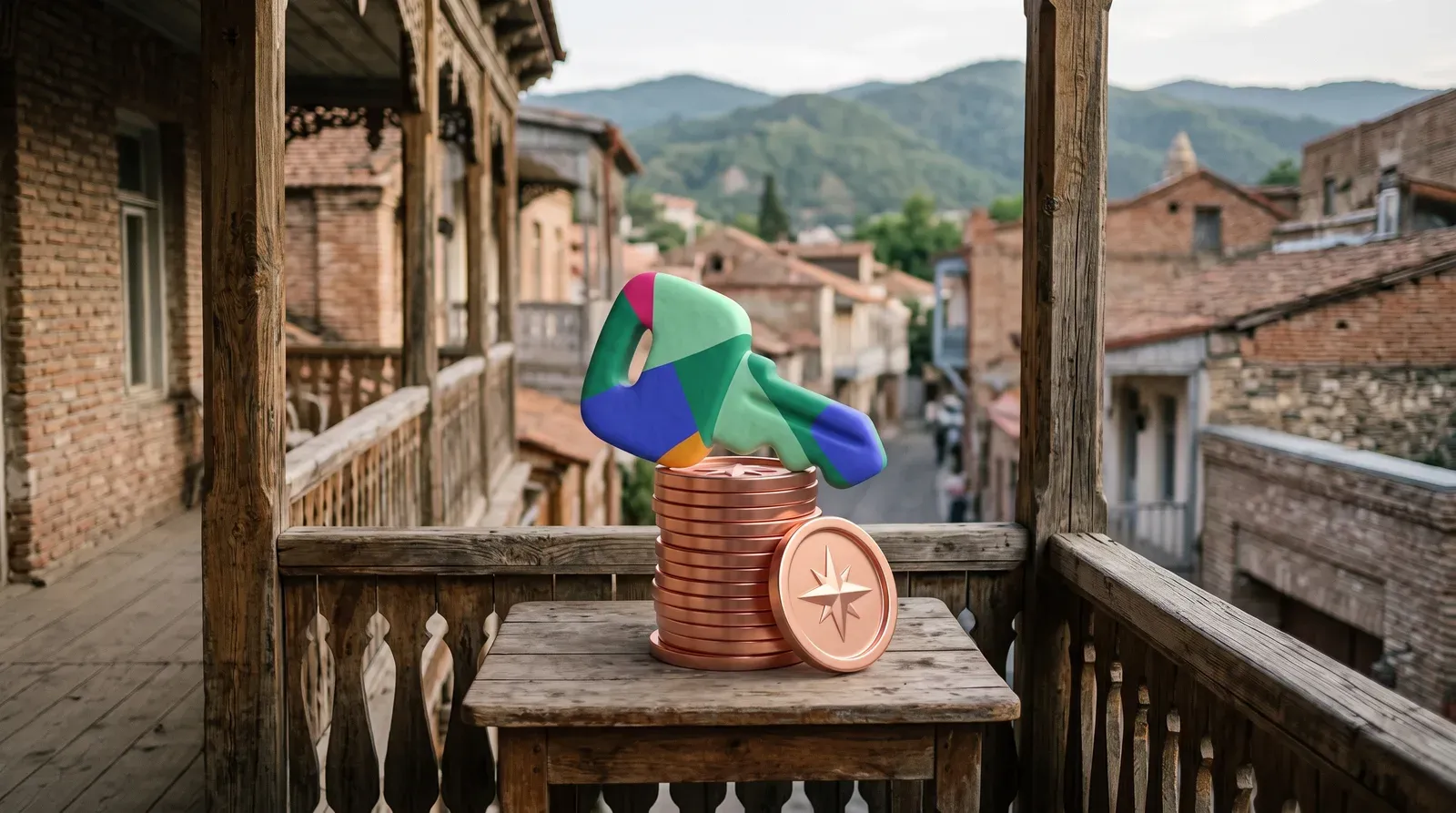
Why does the same flat have two prices?
Before I went to Tbilisi, I looked up rents. The numbers were good. I thought I’d easily find a place for one, three or six months.
Then I arrived. The city was in the middle of a huge housing crisis, and prices were climbing like crazy. If I didn’t take a flat the moment I saw it, finding another empty one seemed almost impossible.
The numbers I’d researched and the flats I was offered no longer matched.
Same city. Same neighbourhood. Same size.
Two prices: the local’s, and mine.
I call the gap the short-term rent premium. For a nomad, it’s one of the biggest lines in the budget.
Where the premium comes from
Furniture, and being ready
A local rents an empty flat, brings their own furniture, sets up their own internet. You arrive with a suitcase and want the bed, the sheets, the pans and the Wi-Fi already there. That readiness has a price, and it goes into the rent.
Flexibility
A tenant on a yearly lease is a year of guaranteed income for the owner. Someone staying a month is uncertainty: how long will the flat sit empty after you leave? When will the next guest come? The owner prices that risk in.
The platform, and cleaning
Booking platforms charge a service fee. Most listings add a cleaning fee to every stay. A local lease has none of these.
In short, you’re not renting a flat. You’re renting a service.
The problem? We usually judge its price by the night.
The 28-night rule
On Airbnb, stays of 28 nights or longer count as monthly stays. Hosts can set weekly and monthly discounts for them, and a monthly discount is shown in search results and in the price breakdown. Weekly and monthly discounts don’t stack: it’s one or the other.
That has a practical consequence. Search with 27 nights and you won’t see the monthly discount. If you want a monthly flat, search with at least 28.
Payment changes too. For a monthly stay, the first month is charged up front, and the rest is collected in instalments, 10 days before each period. The price is locked when you book: month three costs what it cost on the day you reserved.
Negotiating
People assume you can’t negotiate on a platform. You can.
On Airbnb, a host can answer a message you send before booking with a special offer: a custom price, different dates, or another of their places. So saying you’d like to stay longer and asking for a monthly price is something the platform itself is built for.
There’s one line not to cross: taking the payment off the platform. Airbnb’s rules say reservations must be made on Airbnb, and a host asking you to pay outside it breaks those rules — it can be a sign of fraud. “Let’s skip the platform, it’ll be cheaper” sounds tempting. Until something goes wrong, and you have no protection left.
I do. Short stay or long, it doesn’t matter: I always try to bring the price down a little.
Sometimes it works. Sometimes it doesn’t. But it beats never trying.
One month in numbers
Let’s not use my own numbers. Let’s use a round example. Real figures depend on the city, the season and the flat; the point is to see the size of it.
Take a flat at 30 units a night. Judged by the night, a month is 900 units.
- Search with 28 nights and a 20% monthly discount appears: 900 × 0.80 = 720 units
- You message the host that you’d like to stay longer, and a special offer takes off another 10%: 720 × 0.90 = 648 units
Same flat, same month: 252 units between 900 and 648. All of it from how you searched and whether you sent one message.
Over a three-month stay, the same gap is 756 units. Almost a month’s rent.
Compared with a local flat, the premium is still there. But the gap between someone looking at the nightly price and someone asking for the monthly one is often bigger than the premium itself.
What I do now
I usually search with at least 28 nights. I look at the monthly price, not the nightly one.
I always ask for a better price. Short stay or long, one message is worth sending.
I keep the payment on the platform. If something else goes wrong, the platform is my safety net. A few units off isn’t worth losing it.
I book short until I’m sure. If I haven’t found the flat I want, booking it for a long time is a risk, so I keep it short. Once I’m sure about the flat and where it is, I can book several months right away.
I put rent in the country’s wallet, under its own category. Rent is often the biggest part of what a country really costs. Without seeing it on its own, I can’t answer “is this country cheap?”
What Tbilisi taught me was simple: the same flat has two prices. Which one I pay is usually decided not by the flat, but by how I search.
I wish you your next flat at a price as close to the local one as you can get.
Sources
- Airbnb Help Center, Host monthly stays
- Airbnb Help Center, Pay for a monthly stay
- Airbnb Help Center, Pre-approvals and special offers
- Airbnb Help Center, If a host asks you to pay outside Airbnb

About the author
Selçuk Sevindik
Designer and maker of Nomad Budget. I’ve been living as a digital nomad since 2020, and I built this app because tracking money in several currencies at once never worked for me — not in my head, and not in the expense apps I tried.
More of my writing on Medium →