
Life on the road
Slow Travel: Why I Stay One, Three or Six Months
I used to change cities every two days; now I stay for months. What slow travel changes, and a round calculation on the real cost of moving.

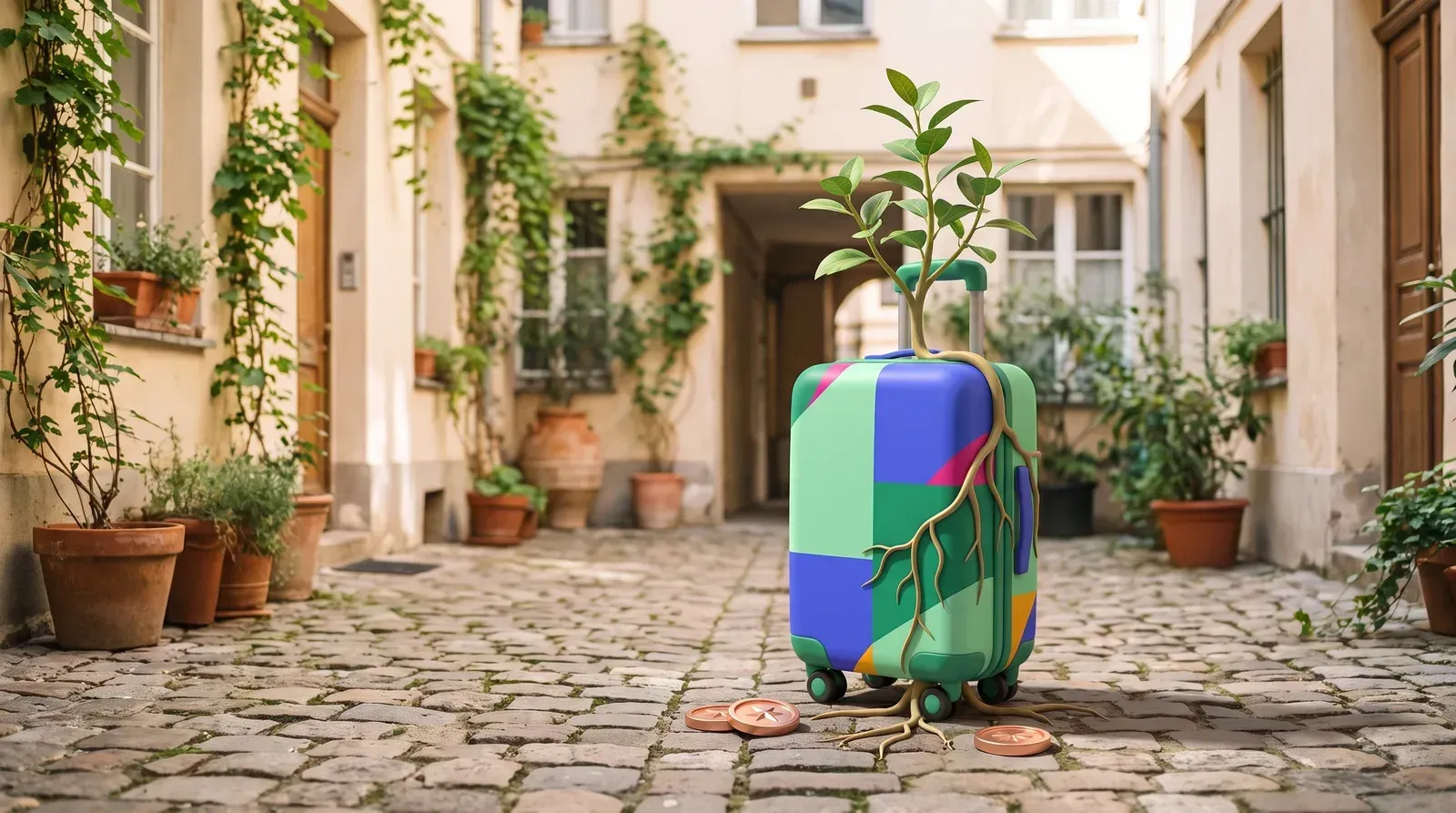
How long do you stay in a place?
On my first long trip, the answer was two days. Vienna, Budapest, Kraków, Prague. Hostels, a backpack, a new city every couple of days.
Fast trips are always packed. Work routines and responsibilities can’t really get in, so it’s non-stop: intense and tiring. It has its good sides and its bad sides.
It’s hard to say one is better than the other. But on a short stay, you usually see a place’s good side, through a tourist’s eyes. Once you live somewhere for more than a month, you suddenly see it isn’t all that rosy, and that it has its problems too.
Today I choose stays of one, three or six months.
Short stays aren’t bad. They’re just a different thing. A short stay is a trip. A long stay is a life, somewhere else.
What staying longer gives me
A routine
The joy of travel is novelty. Work wants routine.
Every move breaks it. Stay long enough, and a routine forms: the same supermarket, the same café, a way home you don’t have to think about.
A neighbourhood
In some European countries, a lot of Turkish people live, and some areas are no different from a neighbourhood in Turkey. Many of the shopkeepers are Turkish. They even notice you’re Turkish when you walk in and say “Hoş geldin”, welcome, in Turkish. It’s like a Chinese person walking into Chinatown.
But here’s the interesting part. Countries with different cultures that share my country’s speed, its chaos, and in some situations its lack of rules, somehow appeal to me more. So it turns out you don’t have to be from the same nation to feel like a local.
Better prices
Longer stays open doors that short ones don’t.
A monthly price instead of a nightly one. A local SIM with a better plan, instead of the eSIM I use on arrival. And for three or six months, a local flat instead of a platform one.
Fewer first weeks
The first week in a new country costs more than a normal week. I wrote about why in my post on the first week in a new country.
Every move means another first week.
The cost of moving, in numbers
Let’s not use my own numbers. Let’s use a round example. Costs depend on the route and the country; the point is to see the size of it.
Say every move costs 150 units: the ticket, the bags, the ride to the new flat, a new SIM, the first big grocery run.
- Move every month: 150 ÷ 1 = 150 units a month
- Move every three months: 150 ÷ 3 = 50 units a month
- Move every six months: 150 ÷ 6 = 25 units a month
Same move, same cost. Stay six months instead of one, and moving costs you a sixth as much each month.
Slow doesn’t mean stuck
Slow travel isn’t staying put forever. But most of the time, I’m not the one who decides when to go.
Usually something outside makes me leave: a visa running out, somewhere I need to be for work, an emergency, or the season. A place I left early on purpose because I didn’t like it? There are none, or very few.
What I do now
I choose one, three or six months. Short stays are for trips. Long stays are for living.
I book short until I’m sure. If I haven’t found the flat I want, I don’t lock myself in. Once I’m sure about the flat and where it is, I book several months.
I go local when I stay longer. A local SIM instead of an eSIM, and for longer stays, a local flat.
That two-day rhythm of my first trip is still a good memory. But the cities I really know are the ones I stayed in long enough to have a routine.
I wish you a city you stay in long enough to call it yours, for a while.

About the author
Selçuk Sevindik
Designer and maker of Nomad Budget. I’ve been living as a digital nomad since 2020, and I built this app because tracking money in several currencies at once never worked for me — not in my head, and not in the expense apps I tried.
More of my writing on Medium →